RITA&DAMIAN

Teaching

About

DAMIAN

RITA

DANCE

Dance, at its fullest, invites the dancer to remain present by weaving embodied knowledge with what is sensed and discovered in the moment. This subtle, continuous exchange between what the body knows and what is perceived in every moment keeps movement alive.

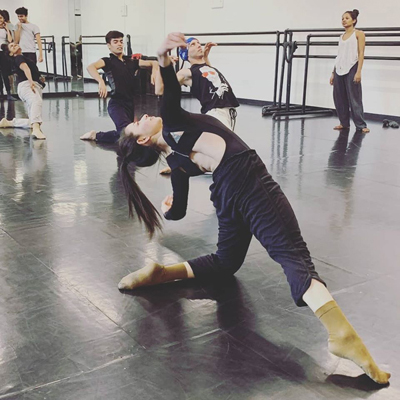
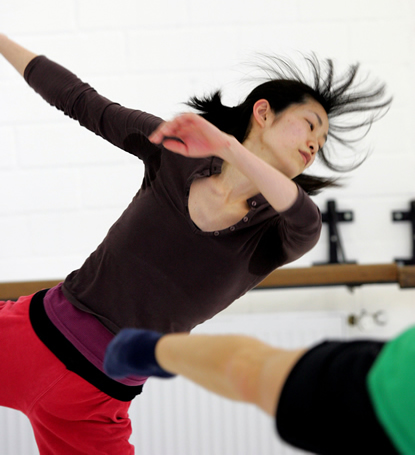
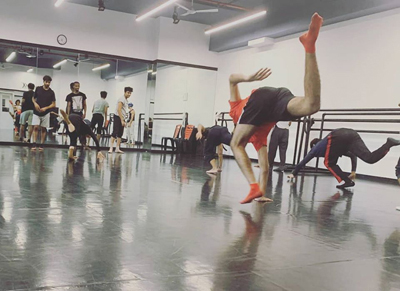
In my classes, I create space for inquiry — listening inward while remaining connected and responsive to the world around us. The training develops proprioceptive awareness and the ability to organize the body efficiently in relation to momentum, weight, and energetic forces. A central focus is flow in relationship to gravity: how we meet gravity, work with it, and allow it to move through us. This relationship shapes not only the quality of movement, but also artistic expression and how we feel within movement. Imagination and attention to detail are cultivated as essential elements in shaping precise, articulate, and expressive movement.

The training develops sensory-motor awareness, refines the sensitivity to different movement qualities expanding flow, timing, spatial orientation and precision. It´s aim is to cultivate a wiede dynamic range, including the capacity for smooth attack, speed and power.

In training I aim to balance between effort and ease, structure and responsiveness — qualities that support an articulate and adaptable movement practice. My approach is informed by years of practice and research, drawing on Release Technique, Floor Work, Modern Dance (Limón, Laban), Capoeira/Martial Arts, Contact Improvisation, and Gaga Movement Language.
I understand dance as an integration of physical, cognitive, and emotional processes. In my teaching, I support this integration by guiding the class in navigating between control and release, so that movement embodies dynamic oppositions like powerful yet light, precise yet free.

  • The class aims to deepen the awareness for gravity and the subtle qualities of movement it inspires: sharpening spatial orientation, speed, explosive energies, and a playful sense for shifting dynamics and rhythms. It is balancing body and mind, effort and ease — hallmarks of true artistic intelligence.

    My work combines different techniques with personal interpretation and knowledge. Being a result of a personal research and experience, the training is influenced by Release Technique, Floor Work, Capoeira, Modern Dance (Limon, Laban), Urban Dance Styles and Improvisation (Contact Improvisation) and Gaga Movement Language.

    Dancing has the wunderful capacity to merge physical, cognitive and affective elements of human beings and a teachers job is to create connections between all these elements. It is the ability to balance the active directions and letting go, that defines gracefullness within art.

Capoeira & Capoeira for Dancers

Capoeira

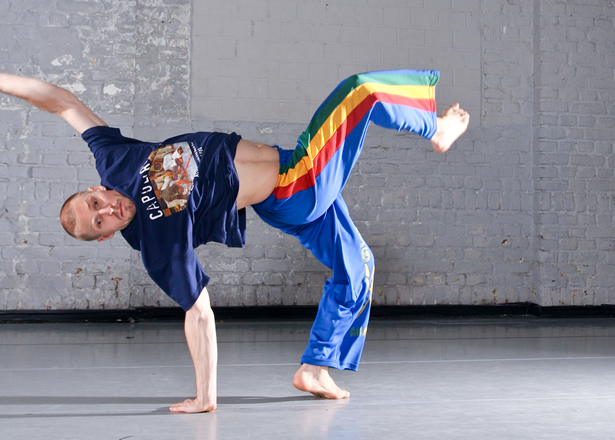
Capoeira is a Brazilian martial art form and national cultural heritage that uniquely blends martial-arts, soft acrobatics, dance and music with poetry and self-expression. Rooted in Afro-Brazilian culture, Capoeira is celebrated as an activity within a circular space called the “roda” (circle).

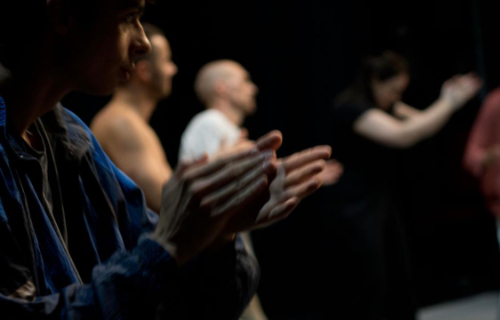
The movement vocabulary of Capoeira draws inspiration from nature and animals. The energy for the game, the rhythm and speed are determined by music and songs. The berimbau, a single steel stringed bow, is the lead instrument, alongside of clapping, singing and rhythmical instruments like the pandeiro (tambourine) and the atabaque (oblong drum). Capoeira welcomes anyone willing to train, regardless of age, race, gender, or athletic experience.

“Capoeira for Kids” values the paedagogic value and magic of Capoeira in an open minded and playful atmosphere.

Capoeira for Dancers

Beyond its playfulness, musical richness, and spirituality, Capoeira offers an enormous reservoir of dynamic movement principles. For contemporary dancers, it provides vigilance and physicality, ease and flow in floorwork and acrobatic sequences—making it a rewarding and inspiring addition to any movement practice.

Playfulness and community exchange are central to Capoeira. Improvisation and instinctive reactions “playing freely” help dancers to move skillfully, to understand better our intentions, and to remain open to spontaneous interactions with dancing partners or co-players.

This class teaches Capoeira movements with a free spirit and greater focus on underlying movement principles. We integrate dancers’ backgrounds by offering expanded possibilities for improvisation and contact.